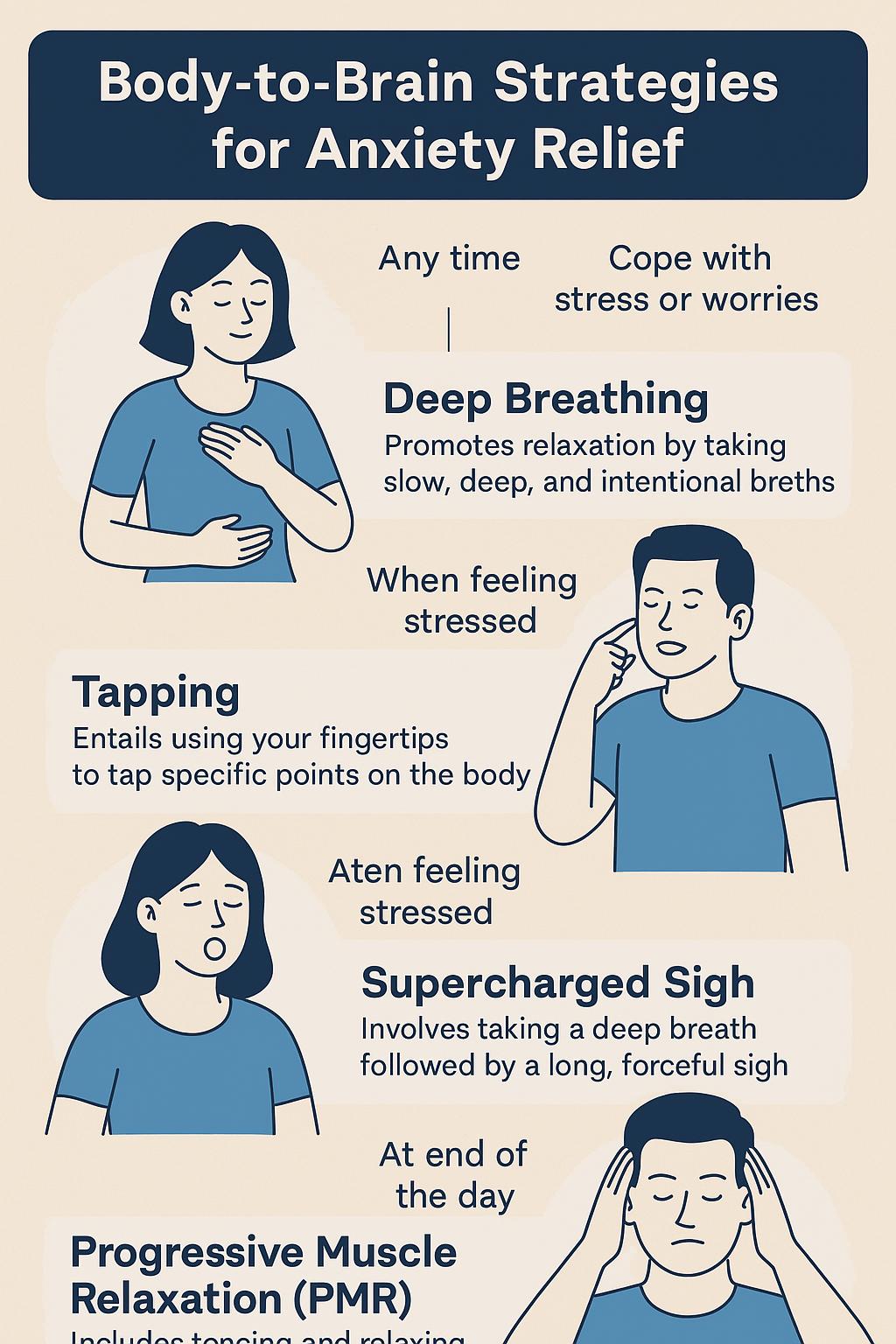
Body-to-Brain Strategies for Anxiety Relief
By Dr. Douglas Cowan, Psy.D.
Marriage and Family Therapist
When anxiety strikes, most people try to think their way out of it. But often, anxiety doesn’t begin with thoughts—it starts in the body. That’s why one of the most effective ways to reduce anxiety is through what we call body-to-brain strategies. These are techniques that begin in the body—through breath, movement, sensation, or rhythm—and send calming signals upward to the brain’s emotional centers.
What Are Body-to-Brain Strategies?
Body-to-brain strategies are tools that regulate anxiety by calming the nervous system directly. They work by activating the parasympathetic nervous system and sending safety signals to the amygdala—the brain’s fear center. Instead of trying to change your thoughts first, these strategies change how your body feels—and let your brain catch up.
When used consistently, these tools help retrain an overactive stress response, increase resilience, and improve emotional regulation.
The Neuroscience of Body-First Regulation
When you experience anxiety, your sympathetic nervous system activates. Your heart races, breathing shortens, muscles tense, and cortisol floods your system. Your body is preparing to run or fight—even when the threat is emotional or imagined.
By stimulating specific sensory systems—like the vagus nerve—you can reverse this stress response. Breathing deeply, tapping, rhythmic movement, and even safe eye contact send signals from your body to your brain that say, “You’re safe.” This downregulates the amygdala and allows the prefrontal cortex (your thinking brain) to come back online.
Top Body-to-Brain Strategies for Anxiety Relief
Here are some of the most effective techniques for calming anxiety from the body up:
· Breathwork**
Slow, diaphragmatic breathing—especially with a longer exhale—stimulates the vagus nerve. Techniques like 4-4-6 breathing or the supercharged sigh can instantly reduce nervous system arousal.
· EFT Tapping (Emotional Freedom Technique)**
Tapping acupressure points on the face, chest, and hands while repeating calming affirmations engages sensory nerves connected to the parasympathetic system. It’s shown to reduce cortisol and amygdala activity in clinical trials.
· CES CalmBox (Cranial Electrotherapy Stimulation)**
This FDA-cleared device delivers a gentle current to the brain via ear clips. It calms overactive circuits, increases alpha brainwaves, and supports parasympathetic activation. It's a powerful daily tool for individuals with chronic stress or trauma histories.
· Cold Water Stimulation**
Splashing cold water on the face or brief cold exposure can activate the diving reflex and the vagus nerve, shifting the body into rest-and-digest mode.
· Grounding Techniques**
Walking barefoot on grass, touching natural textures, or holding an object while naming its features (color, texture, weight) engages sensory input and anchors attention away from racing thoughts.
· Gentle Movement**
Rhythmic activities like walking, swaying, stretching, or rocking send powerful calming signals to the nervous system—especially when paired with music or nature.
· Humming and Singing**
These vibrate the vocal cords and stimulate the vagus nerve. Low-frequency sounds in particular are calming to both body and brain.
Why These Tools Work When Talk Therapy Doesn’t
In moments of high stress, your thinking brain often goes offline. Logic and language become inaccessible. This is especially true for individuals with trauma, sensory processing differences, ADHD, or chronic anxiety.
Body-to-brain strategies bypass the need for logic and engage the nervous system directly. They work particularly well for kids, teens, and adults who have trouble verbalizing what’s wrong or feel overwhelmed by traditional therapeutic approaches.
Daily Routine to Regulate Your Nervous System
· Morning**: Breathwork (4-4-6), gratitude journaling, X39 and Aeon patches
· Midday**: Short walk, EFT tapping, grounding exercise
· Evening**: CES CalmBox session, warm tea, stretching, calming music or scripture reading
Body First—Then the Brain Can Follow
Once the body is calm, top-down strategies (like CBT, problem-solving, or journaling) become far more effective. If you feel like talk therapy isn’t helping, it might be because your nervous system is too dysregulated to engage.
Final Thoughts
You don’t need to be at the mercy of your anxiety. By learning to work with your body, you can send powerful signals of safety to your brain. These body-to-brain strategies offer accessible, science-backed relief that empowers you to feel more calm, grounded, and resilient—starting today.
· This article is for educational purposes only and does not replace professional mental health treatment. Consult a licensed provider for personalized care.*