Anxiety

What Are the Symptoms of Anxiety? A Plain-Language Guide

Search questions:

Maybe your heart is racing. Your chest feels tight. You're short of breath or dizzy, and you can't figure out why. You're wondering: Is this anxiety? A panic attack? Something worse?

In the middle of it, it's nearly impossible to think clearly. So let's slow down together, and I'll tell you what's happening.

First: you are not broken. What you're experiencing is real — but it is also understandable once you know what's driving it. Your body is not failing you. It's doing exactly what it was designed to do. The problem is that the alarm system is firing when there's no fire. And that can be changed.

What Is Anxiety?

Anxiety is the brain's threat-detection system running on overdrive. It's not a weakness, and it's not imaginary — it's a physiological state driven by real brain chemistry and real neural activation. The amygdala, a small structure deep in the temporal lobe, is your brain's smoke alarm. When it detects danger — real or imagined — it fires, triggering a cascade of hormonal and physical responses designed to help you survive.

That response was built for immediate, physical threats. Your heart rate goes up to pump more blood to the muscles. Your breathing quickens to take in more oxygen. Your digestion pauses because digesting food is not the priority when you're being chased. Your muscles tense for action. Everything in your body orients toward one goal: survive this.

The problem in modern life is that the amygdala can't always distinguish between a lion and an unanswered email. A deadline, a social conflict, a fear of the future, or even a memory can activate the same cascade. And in chronic anxiety, this response becomes the baseline — the alarm stays on even when the threat has passed.

What's Happening in the Brain

The anxiety response begins with the amygdala's threat assessment and moves through the hypothalamus, which activates the HPA axis (hypothalamic-pituitary-adrenal axis), triggering the release of cortisol and adrenaline from the adrenal glands. These hormones then produce every physical symptom you feel.

The prefrontal cortex — the rational, reasoning part of your brain — is supposed to evaluate the amygdala's threat assessment and say, Actually, this is just an email. Stand down. But when the stress response is intense or has been activated repeatedly, the prefrontal cortex gets bypassed. The fear response runs faster than rational thought. By the time you're thinking about it, your heart is already racing.

Chronic anxiety — anxiety that persists for weeks, months, or years — actually changes the brain. Research shows it can enlarge the amygdala (making it more reactive), shrink the hippocampus (making it harder to contextualize fear), and weaken the prefrontal cortex's ability to regulate emotional response. The biology of anxiety is cumulative. The longer it goes untreated, the more the brain adapts to stay in a threat-detection state.

This is not a character flaw. It's neuroscience. And neuroscience can be changed.

Now You Understand Why: The 7 Symptoms Clinicians Measure

Clinicians use the GAD-7 — the Generalized Anxiety Disorder 7-item scale — to measure anxiety severity. Its seven items describe exactly what happens when the amygdala is overactivated and the nervous system is chronically dysregulated. Understanding each one helps you name what you're experiencing.

  1. Feeling nervous, anxious, or on edge. The background hum of an alarm that hasn't reset. Not full panic — just a persistent sense that something isn't right. Many people live with this for years before recognizing it as anxiety.
  2. Not being able to stop or control worrying. The prefrontal cortex, which should interrupt the worry loop, is overwhelmed. The rational mind knows there's nothing to do about the worry right now — but it can't stop it anyway.
  3. Worrying too much about different things. A dysregulated nervous system extends threat-detection across all domains. The anxious brain doesn't confine worry to one subject — it moves from problem to problem, always searching for what might go wrong.
  4. Trouble relaxing. The parasympathetic nervous system — the "rest and digest" branch — never fully activates because the HPA axis is chronically elevated. The body stays tense because the brain never sends the all-clear signal.
  5. Being so restless that it is hard to sit still. Adrenaline was meant to fuel action. When there's nothing to run from, the arousal circulates unused. The body is primed for movement that never happens.
  6. Becoming easily annoyed or irritable. An overtaxed nervous system has no reserve. The amygdala is already near threshold. Small frustrations tip it over. This is frequently misread as a temperament problem — it's actually a depletion problem.
  7. Feeling afraid, as if something awful might happen. The amygdala's constant output when stuck in threat mode. The sense of impending doom is not irrational — it's the predictable product of a brain that has been trained to expect danger.

You may recognize yourself in some or all of these. The GAD-7 scores them on frequency over the past two weeks and gives a total from 0–21: minimal (0–4), mild (5–9), moderate (10–14), or severe (15–21). The score isn't a verdict. It's information — a starting place.

📋 How Severe Is Your Anxiety?

The GAD-7 is a clinically validated seven-question screening tool used by providers worldwide. It takes about two minutes and gives you and your clinician a common language for what you're experiencing.

Take the GAD-7 Self-Assessment →

Physical Symptoms: What the Body Does

Because anxiety is a physiological state, not just a mental one, it produces a wide range of physical symptoms that can be alarming — especially the first time they appear.

All of these are produced by the stress hormones doing their job. They're not signs of a physical illness — they're signs of a nervous system running in emergency mode without an emergency.

Panic Attack or Heart Attack?

This is one of the most common fears people bring to the emergency room. And it's worth taking seriously — because the symptoms can overlap enough to be genuinely confusing.

A panic attack is a sudden surge of intense fear, typically peaking within 10 minutes. Symptoms include heart palpitations, chest pain, shortness of breath, dizziness, numbness, sweating, and a profound fear of dying or losing control. The first panic attack frequently results in a trip to the ER. Doctors run tests, find nothing wrong with the heart, and send the person home. That's an important diagnostic outcome — but it can also leave the person confused and frightened.

Here are general distinctions. If you're ever in doubt, seek medical attention — it is not overreacting to get checked:

Once cardiac causes are ruled out, the diagnosis of panic disorder is worth taking seriously and treating directly. Panic that goes untreated tends to generalize — the person begins avoiding more and more situations that might trigger it, and the world gets smaller.

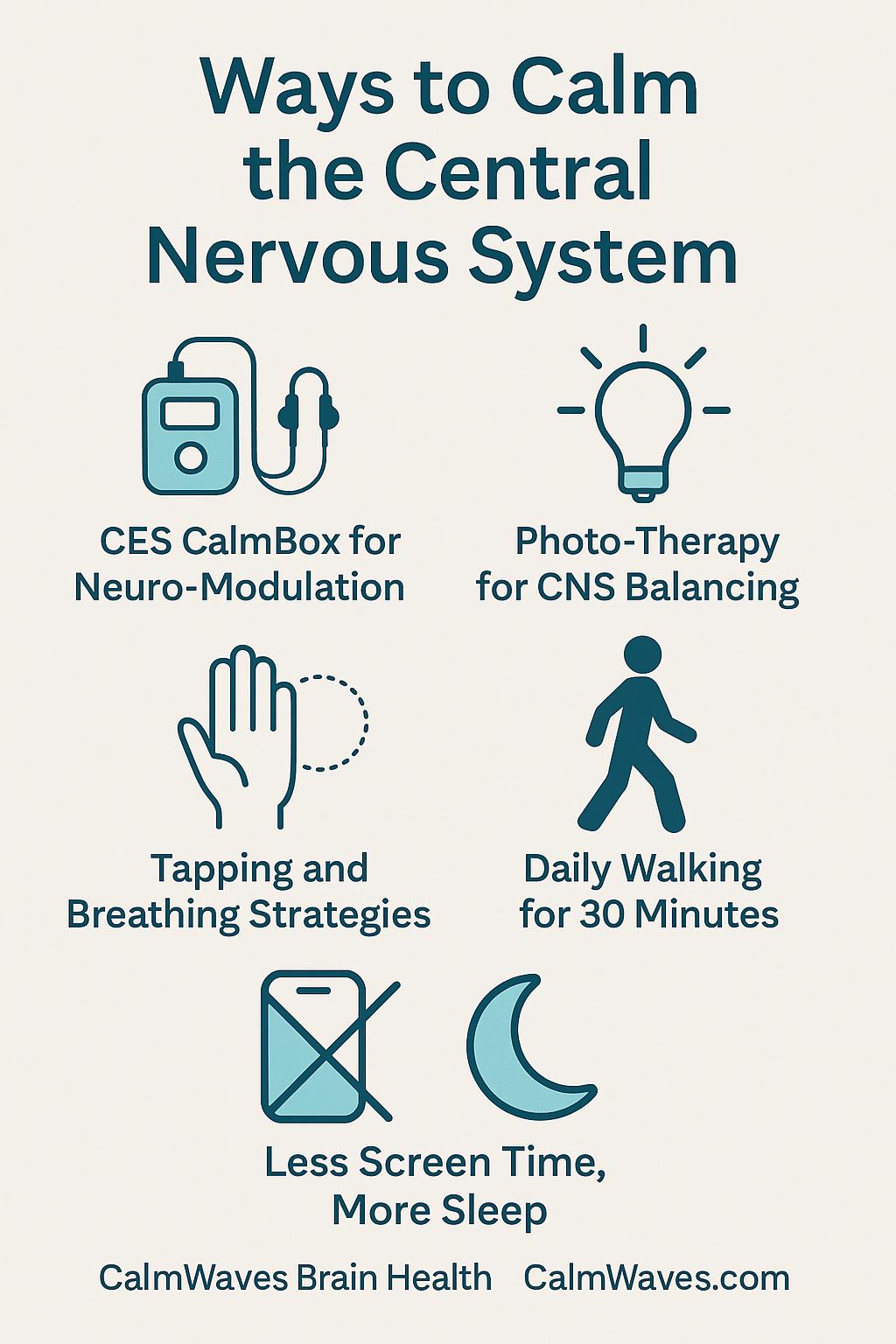
What To Do Starting Today

You Are Not the Alarm

Here's what I want you to carry with you: anxiety is not who you are. It's a state your nervous system has learned to maintain. And nervous systems can learn new things.

The physical symptoms that feel so frightening — the racing heart, the chest tightness, the dizziness — are not dangerous. They are your body doing what it was built to do, at the wrong time. Once you understand that, you can begin to work with your nervous system instead of fighting it.

The alarm doesn't have to stay on. The door is open. We just need better tools to walk through it together.

References

  1. Spitzer, R.L., Kroenke, K., Williams, J.B.W., & Löwe, B. (2006). A brief measure for assessing generalized anxiety disorder: The GAD-7. Archives of Internal Medicine, 166(10), 1092–1097.
  2. LeDoux, J. (2015). Anxious: Using the Brain to Understand and Treat Fear and Anxiety. Viking Press.
  3. Lieberman, M.D., et al. (2007). Putting feelings into words. Psychological Science, 18(5), 421–428.
  4. Bremner, J.D. (2006). Traumatic stress: Effects on the brain. Dialogues in Clinical Neuroscience, 8(4), 445–461.
  5. Sapolsky, R.M. (2004). Why Zebras Don't Get Ulcers (3rd ed.). Holt Paperbacks.
About the author. Dr. Douglas Cowan, Psy.D., is a Licensed Marriage and Family Therapist with 40 years of clinical experience and over 35 years in neurofeedback, licensed and practicing since 1988. Read his full credentials →