What Helps

Neurofeedback for ADHD: What It Is, What It Does, and Whether It Works

I have been practicing neurofeedback since the late 1980s — before most people had heard the word.

In the early years, I had to explain what it was constantly. Now people come to see me having already read about it, having already decided they want it, and wanting to know if it is real.

It is real. The evidence has caught up to the clinical experience. What I could not fully explain with research 30 years ago, I can explain quite well now.

But “it’s real” and “it’s the right tool for your specific situation” are different questions. This article covers both.


What Neurofeedback Is

Neurofeedback is a type of biofeedback that uses real-time monitoring of brain electrical activity (EEG) to train the brain toward better self-regulation.

The basic setup: electrodes placed on the scalp detect the brain’s electrical activity. A computer processes this signal and provides instant feedback — typically a visual display or a sound — that tells the brain when it is producing the desired pattern of activity. When it does, the feedback is positive (the movie plays, the sound continues). When it doesn’t, the feedback is neutral or absent.

The brain learns from this. Over many repetitions — typically across 30–40 sessions — it begins to produce the desired patterns more efficiently, without conscious effort. This is operant conditioning applied to the brain itself.

This is not magic. It is training. The same neuroplasticity that allows the brain to learn any new skill — playing piano, swinging a golf club, speaking a new language — allows it to learn better regulatory patterns.


Why ADHD and Neurofeedback Are a Natural Match

The ADHD brain has specific, measurable electrical abnormalities that neurofeedback is well-suited to address.

The most consistent finding in ADHD brain research is excess theta waves (4–8 Hz range, associated with daydreaming and inattention) and insufficient beta waves (13–21 Hz, associated with focused, alert attention), particularly in the prefrontal cortex — the brain’s management center.

This theta/beta ratio imbalance is not universal — there are different EEG patterns associated with different ADHD subtypes. But when it is present, it produces a very recognizable clinical picture: the brain that drifts when it should focus, that cannot sustain alert engagement without high stimulation, that loses track of what it was doing moments ago.

Standard neurofeedback for ADHD typically trains the brain to reduce theta activity and increase beta activity in the areas where the imbalance is most pronounced. This directly addresses the neurological pattern driving the inattention and regulation difficulties.

The result — when treatment is successful — is not a sedated brain or a different brain. It is a brain that can do what it was always capable of doing, more consistently, with less conscious effort.


What the Research Says

I want to be straightforward with you about the research because there is honest debate about the strength of the evidence — and you deserve accurate information.

What the research clearly supports:

A 2009 meta-analysis by Arns and colleagues, published in Clinical EEG and Neuroscience, analyzed 15 studies involving 1,253 participants and found that neurofeedback produced significant improvements in inattention and hyperactivity/impulsivity, with large effect sizes. The researchers concluded that neurofeedback should be considered a “probably efficacious” treatment for ADHD by the evidence standards used in the field.

A 2012 meta-analysis by Lofthouse and colleagues found significant effects on both parent and teacher ratings of ADHD symptoms. A 2014 study by Geladé and colleagues used an active control condition (cognitive training) and still found significant advantages for neurofeedback on teacher-rated attention.

More recent work — particularly from researchers like Martijn Arns in the Netherlands and Sandra Loo at UCLA — has been refining which protocols work best for which ADHD subtypes, with increasingly specific and effective approaches.

Where the debate is:

The most contentious issue in neurofeedback research is “blinding” — the difficulty of creating a placebo condition that convincingly mimics neurofeedback. Some critics argue that without adequate double-blinding, neurofeedback effects cannot be distinguished from expectation and therapeutic attention. This is a legitimate methodological concern.

The response from researchers, including Arns and others, is that the magnitude and persistence of neurofeedback effects exceed what is typically seen from non-specific therapeutic attention, and that EEG changes documented pre- and post-treatment confirm that the brain is actually changing, not just that behavior is improving.

My own 35+ years of clinical experience aligns with the research. I have seen neurofeedback produce changes in children and adults who had not responded well to other treatments. I have seen the changes persist — sometimes for many years — after treatment ended. And I have seen it not work, or work more slowly, for some people. It is a tool, not a guarantee.

The bottom line on evidence: Neurofeedback has more research support than most of the non-pharmaceutical alternatives for ADHD. It is classified as “Level 4: Efficacious” by the Association for Applied Psychophysiology and Biofeedback (AAPB) and similar bodies. It is not as well-studied as stimulant medication, but it is far from experimental.


Traditional Neurofeedback vs. Direct Neurofeedback

If you have started researching neurofeedback for ADHD, you have probably encountered two distinct approaches. Understanding the difference helps you have a better conversation with any clinician you consult.

Traditional Neurofeedback (Standard EEG Biofeedback)

In traditional neurofeedback, the client sits in front of a screen and actively participates in training. The most common setup involves watching a game or video that responds to the brain’s activity — the character moves when the brain produces the desired pattern, stops when it doesn’t.

Protocols for ADHD typically target the theta/beta ratio, sensorimotor rhythm (SMR), or specific sites identified by a quantitative EEG (QEEG) assessment as problematic. Sessions are typically 30–50 minutes of actual training.

What it requires: Active engagement. The client needs to be able to sit and attend to the feedback for extended periods. For young children or highly distractible clients, this can be challenging — though experienced clinicians have ways to manage it.

Typical course: 30–40 sessions, 2–3 times per week initially, tapering as training progresses. Some people, particularly those with complex presentations, need more.

What the gains look like: Gradual improvement in sustained attention, impulse control, and emotional regulation. Parents and teachers often notice changes before the child does. Academic performance tends to follow the behavioral improvements.

Direct Neurofeedback (LENS — Low Energy Neurofeedback System)

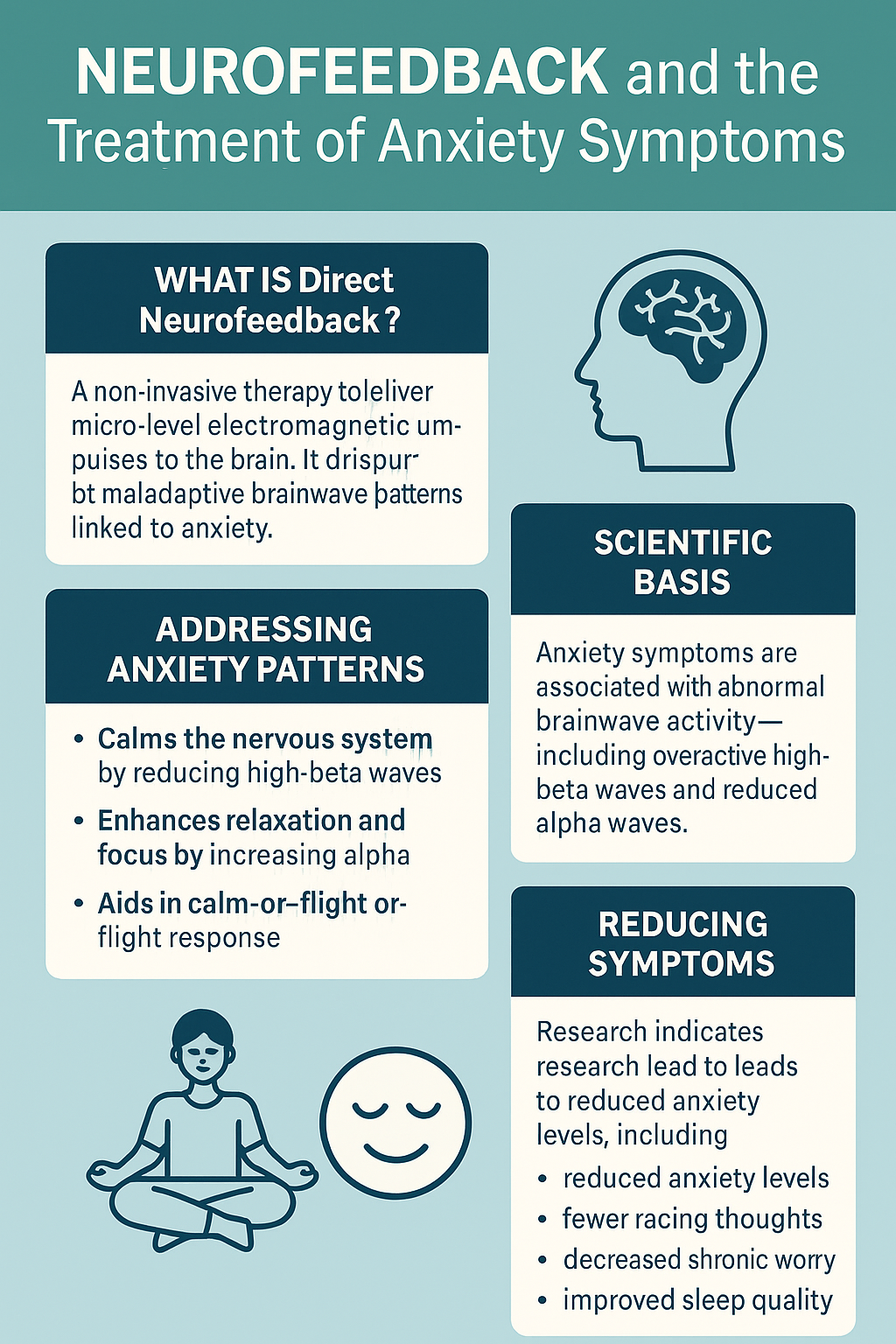
Direct neurofeedback, also called LENS (Low Energy Neurofeedback System) or Othmer Method direct variants, takes a fundamentally different approach. Instead of training the brain to change its patterns through active practice, LENS delivers imperceptibly small electromagnetic signals to the brain that interrupt habitual dysregulation patterns.

The client does not need to consciously participate. They sit (or in the case of young children, may be resting or playing quietly) while the practitioner maps the brain’s activity and delivers very brief signals to specific sites. Sessions are often short — 30–60 minutes total, with actual signal delivery measured in seconds to minutes per site.

What it requires: Almost nothing from the client. This makes direct neurofeedback particularly accessible for young children, highly anxious clients, or those who struggle with the sustained attention required by traditional neurofeedback.

Typical course: Many people notice significant changes within 10–20 sessions. Full course for ADHD is typically 20–30 sessions.

How it works: The LENS signal interrupts the brain’s habitual electrical patterns, giving it an opportunity to reorganize toward better regulation. Rather than training the brain to produce new patterns consciously, LENS provides a perturbation that prompts the brain to self-organize more efficiently.

The gains: Often faster initial changes than traditional neurofeedback. The changes tend to hold well over time, with many people requiring only occasional “tune-up” sessions after the initial course.


Who Benefits Most from Neurofeedback for ADHD

In my clinical experience, neurofeedback tends to produce the best results in:

Children with clear EEG abnormalities. When a quantitative EEG (QEEG) shows the theta/beta imbalance typical of the inattentive type, the training is targeting a clear neurological pattern. Results tend to be strong.

People who have not responded well to medication. Whether because medication was ineffective, caused intolerable side effects, or is medically contraindicated, neurofeedback offers an alternative path to brain regulation.

Families who prefer a non-pharmaceutical approach. Neurofeedback is not a way to avoid treating ADHD seriously — it is a serious treatment. For families who are committed to consistent sessions and realistic expectations, it can be a genuinely effective alternative to or complement of medication.

Children with anxious ADHD (the Piglet type). Neurofeedback can address both the ADHD dysregulation and the anxiety hyperarousal simultaneously. Some anxious children respond poorly to stimulants; neurofeedback is a natural fit.

Adults who want lasting change, not just management. Unlike medication, which helps while it is in the system and stops when it isn’t, neurofeedback produces changes in the brain’s self-regulatory capacity that persist. Many adults describe a qualitative shift in how their brain works — not just symptom management.

People who have done some of the work and want to do more. Neurofeedback works best as part of a comprehensive approach. The people who benefit most are the ones who combine it with appropriate medication if needed, behavioral strategies, exercise, and the other lifestyle factors that support brain health.


What Neurofeedback Cannot Do

I want to be honest about this too.

Neurofeedback is not a cure for ADHD. It does not address the underlying genetics. It does not teach organizational skills, social skills, or emotional regulation skills — though it creates a neurological environment in which those skills are easier to learn and apply.

Neurofeedback does not work equally well for everyone. Some people show dramatic improvement. Some show modest improvement. Some show minimal change. A good clinician will monitor your response and adjust the protocol, and will be honest with you if you are not responding.

Neurofeedback is not fast. Even direct neurofeedback, which shows initial changes relatively quickly, requires multiple sessions over several weeks. If you are looking for rapid symptom relief, medication is more appropriate in the short term. Neurofeedback is a longer-term investment in how the brain functions.

Neurofeedback requires consistent attendance. Missing sessions — particularly in the early phases of training — slows progress and can reduce effectiveness. This is a real practical consideration for busy families.


What to Look for in a Neurofeedback Provider

Not all neurofeedback is equal. The practitioner’s training, experience, and clinical judgment significantly affect outcomes.

Certification: Look for practitioners certified by the Biofeedback Certification International Alliance (BCIA), which requires training, supervised experience, and continuing education specifically in neurofeedback.

Experience with ADHD specifically: Neurofeedback for anxiety and trauma uses different protocols than neurofeedback for ADHD. Make sure the practitioner has significant specific experience with ADHD presentations.

Assessment before training: A reputable practitioner will conduct some form of assessment before beginning training — ideally a quantitative EEG (QEEG) that maps the brain’s activity and identifies the specific patterns to target. Generic one-size-fits-all protocols are less precise.

Realistic expectations: A good neurofeedback provider tells you what to expect in terms of timeline, what success looks like, and what they will do if you are not responding as expected. Overpromising is a red flag.

Integration with other treatment: Neurofeedback is most effective as part of a broader treatment approach, not as a standalone solution. A practitioner who understands this and can work with your other providers is preferable to one who insists neurofeedback is all you need.


The Bottom Line

I have watched neurofeedback change children’s lives — not always, not in everyone, but consistently enough over 35+ years that I consider it one of the most valuable tools in a comprehensive ADHD treatment plan.

It works by training the brain rather than managing it. The gains hold. The brain learns something new — and keeps knowing it.

Is it right for your child or for you? That depends on your specific situation, your ADHD subtype, your history with other treatments, your practical capacity to commit to a course of sessions, and what your specific goals are. A qualified clinician can help you make that determination.

What I can tell you with confidence is that neurofeedback is not fringe. It is not unproven. And it is not a replacement for everything else — it is one powerful tool among several that, combined thoughtfully, give the ADHD brain the best chance to function as it is capable of functioning.

The brain is not broken. It is trainable.


References

  1. Arns, M., et al. (2009). Efficacy of neurofeedback treatment in ADHD: The effects on inattention, impulsivity and hyperactivity: A meta-analysis. Clinical EEG and Neuroscience, 40(3), 180–189. PubMed

  2. Lofthouse, N., et al. (2012). A review of neurofeedback treatment for pediatric ADHD. Journal of Attention Disorders, 16(5), 351–372. PubMed

  3. Geladé, K., et al. (2016). A randomized controlled trial into the effects of neurofeedback, methylphenidate, and physical activity on EEG power spectra in children with ADHD. Journal of Child Psychology and Psychiatry, 57(5), 633–644. PubMed

  4. Monastra, V.J., et al. (2005). Electroencephalographic biofeedback in the treatment of attention-deficit/hyperactivity disorder. Applied Psychophysiology and Biofeedback, 30(2), 95–114. PubMed

  5. Loo, S.K., & Makeig, S. (2012). Clinical utility of EEG in attention-deficit/hyperactivity disorder: A research update. Neurotherapeutics, 9(3), 569–587. PubMed

  6. Sherlin, L.H., et al. (2011). Neurofeedback and basic learning theory: Implications for research and practice. Journal of Neurotherapy, 15(4), 292–304.

  7. Hammond, D.C. (2011). What is neurofeedback: An update. Journal of Neurotherapy, 15(4), 305–336.

Frequently Asked Questions

Does neurofeedback actually work for ADHD?

Yes. Multiple meta-analyses and randomized controlled trials support neurofeedback as an evidence-based treatment for ADHD. A 2009 meta-analysis by Arns and colleagues found that neurofeedback produced significant improvements in attention and impulsivity comparable to medication in some populations. The gains tend to persist after treatment ends.

How many neurofeedback sessions does ADHD treatment take?

Traditional neurofeedback typically requires 30–40 sessions for significant, lasting results, with many people noticing changes at 10–15 sessions. Direct neurofeedback (LENS) often shows results in 15–25 sessions. Sessions are typically 2–3 times per week initially.

Is neurofeedback safe for children with ADHD?

Yes. Neurofeedback has an excellent safety record across 50+ years of use with children and adults. It is non-invasive, non-pharmaceutical, and appropriate for all ages. Side effects are rare and typically mild — occasional fatigue or temporary increase in symptoms as the brain adjusts.

What is the difference between traditional neurofeedback and direct neurofeedback?

Traditional neurofeedback is an active training process — the child or adult watches a screen and consciously practices shifting brain states over 30–40+ sessions. Direct neurofeedback (LENS) requires no active participation — the brain responds to a brief electromagnetic signal. Both are effective; direct neurofeedback often shows faster initial changes.


About the author. Dr. Douglas Cowan, Psy.D., is a Licensed Marriage and Family Therapist with 40 years of clinical experience and over 35 years in neurofeedback, licensed and practicing since 1988. Read his full credentials →